An Attempt To Push Ubuntu As A Gaming Platform
Posted by Michael Larabel on October 12, 2012

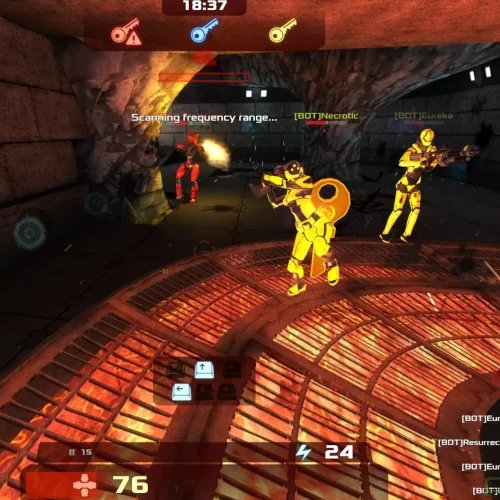
At the Ubuntu Developer Summit later this month in Copenhagen, a number of gaming-related development sessions are scheduled as Ubuntu developers try to push their Linux distribution as a first-rate gaming platform.

Among the sessions scheduled so far (the links though are rather pointless until the event takes place since they just go to blank EtherPads) for the Ubuntu 13.04 Developer Summit spanning two days are the following topics as it pertains to Ubuntu gaming:

Audio Support - "Audio of all forms (stereo, surround, 3D positional, etc.) must work extremely well in Ubuntu."

Longevity of Binaries - "We want to discuss and address considerations on obsolescence of libraries during a game's lifetime and how this works in Ubuntu when compared to other platforms."

Graphics Support - "Graphics in general must work extremely well in Ubuntu (OpenGL specifically)."

Input Devices Support - "Input devices (joysticks and gamepads), low-latency input and full button support for gaming mice and keyboards must work extremely well in Ubuntu."

Multi-Arch Libappindicator - "The libappindicator3 package in Ubuntu 12.04 and 12.10 has not been converted to multi-arch. This causes some pain points in the Valve Steam builds."

Process Clean-Up Actions - "We need to address possible issues with process cleanup not handling some important actions (e.g. video mode restoration after app exit or crash)."

Unity Performance - "Unity costs about 10% in frame rate performance drop when running a game."

Audio Latency - "Audio latency is relatively high on Linux and we need to be competitive with other platforms."

Can Ubuntu make it as a viable gaming platform? Will Ubuntu Linux end up being used in any "Steam Box" console? Linux has a lot of potential to be an interesting and competitive gaming platform, but there's a lot of work ahead to make that happen.

It will be interesting to see what comes out of these Ubuntu gaming sessions at UDS-R, since as many know, Canonical isn't a company that's historically been known to do a lot of low-level upstream development work when it comes to graphics drivers, kernel feature enhancements, and other large technical initiatives for advancing the Linux kernel and related components.

Discuss this article in our forums, IRC channel, or email the author. You can also follow our content via RSS and on social networks like Facebook, Identi.ca, and Twitter (@Phoronix and @MichaelLarabel). Subscribe to Phoronix Premium to view our content without advertisements, view entire articles on a single page, and experience other benefits.
Latest Hardware Reviews
  1. Intel Haswell HD Graphics 4600 vs. AMD Radeon Graphics On Linux
  2. Intel Haswell HD Graphics 4600 Performance On Ubuntu Linux
  3. Intel Core i7 4770K "Haswell" Benchmarks On Ubuntu Linux
  4. The First Experience Of Intel Haswell On Linux
Latest Software Articles
  1. Optimized Binaries Provide Great Benefits For Intel Haswell
  2. 11-Way Linux, BSD Platform Comparison
  3. SNA Acceleration Works Great For Intel Core i7 Haswell
  4. The Linux Evolution For Intel Haswell's Performance
Latest Linux News
  1. Mir's GPLv3 License Is Now Raising Concerns
  2. NVIDIA Driver Soon Likely To Support EGL, Mir
  3. OpenMandriva Goes Into Alpha Form, Russian-Based
  4. NVIDIA Brings Their Linux Driver To ARM
  5. D Language Still Showing Promise, Advancements
  6. Planetary Annihilation Released For Linux Gamers
  7. Gentoo Starts Work On KDE-Wayland Support
  8. NVIDIA To License Its Kepler GPU Technology
  9. KDE's KWin Made Lots Of Progress In 4.11
  10. Ubuntu Announces Carrier Advisory Group
  11. Qt 5.1 Release Candidate 1 Has Arrived
Latest Forum Talk
  1. Mir's GPLv3 License Is Now Raising Concerns
  2. D Language Still Showing Promise, Advancements
  3. VP9 Codec Now Enabled By Default In Chrome
  4. In-Fighting Continues Over Mir On Non-Unity Ubuntu
  5. Gentoo Starts Work On KDE-Wayland Support
  6. Benchmarking The Intel P-State, CPUfreq Changes
  1. Computers
  2. Display Drivers
  3. Graphics Cards
  4. Motherboards
  5. Peripherals
  6. Processors
  7. Software
  8. Operating Systems
  9. All Articles
  1. Linux Benchmarking
  2. OpenBenchmarking.org
  3. Phoronix Test Suite