In less than one minute, it's now possible to build the Linux kernel from source on a desktop.
Besides
finishing up the Phoronix Test Suite 3.6-Arendal release this weekend, on Saturday I began running some new Intel CPU benchmarks. In building the Linux 3.1 kernel for x86_64 in a default configuration (
make defconfig), I've now managed to trim down the compile time to less than sixty seconds on a
single-socket desktop system. Similar speeds can be achieved out of multi-socket servers and other configurations, but this is the first time I'm seeing such kernel build speeds out of a single processor -- the
AMD FX-8150 Bulldozer doesn't come close.
What's the magic behind this? Unfortunately it's not due to some crazy new compiler optimizations for GCC (or LLVM/Clang would be more likely) or any magical change in the Linux kernel build infrastructure, but it's thanks to the Sandy Bridge Extreme Edition. The
Intel Core i7 3960X Extreme Edition is one hell of a mighty processor.

A full Linux review will be published in the next few days, but the 3960X a phenomenal six-core processor with Hyper Threading to provide a total of 12 threads. The CPU operates with a 3.3GHz base frequency, 3.9GHz Turbo Boost, 15MB of L3 cache, 256KB of L2 cache per core, and has a quad-channel DDR3 memory controller. This Sandy-E processor is even a measurable upgrade over the
Core i7 990X "Gulftown" Extreme Edition CPU that was Intel's thousand-dollar CPU up until now. The Intel Core i7 3960X was launched last month, but due to
being out of the country, I didn't have a chance to play with Sandy-E until now.
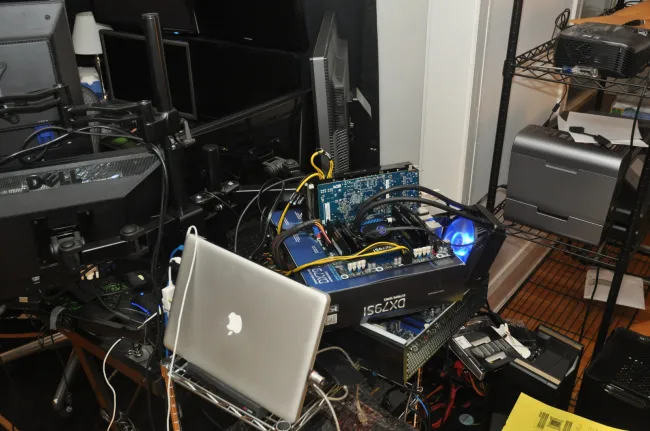
Intel sent out the i7-3960X, their flagship Intel X79 motherboard, and a water cooling system to Phoronix for some Linux testing.
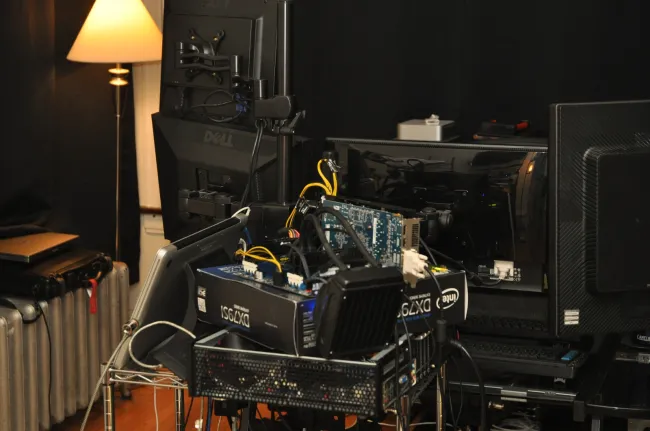
Paired with the Intel Core i7 3960X was a
OCZ Vertex 3 Serial ATA 3.0 solid-state drive, 16GB of RAM (quad-channel 4 x 4GB DDR3-1600MHz), and
AMD Radeon HD 6950 Cayman graphics. On the software side I'm testing against an
Ubuntu 12.04 LTS development snapshot with the Linux 3.2 kernel and GCC 4.6. In this configuration
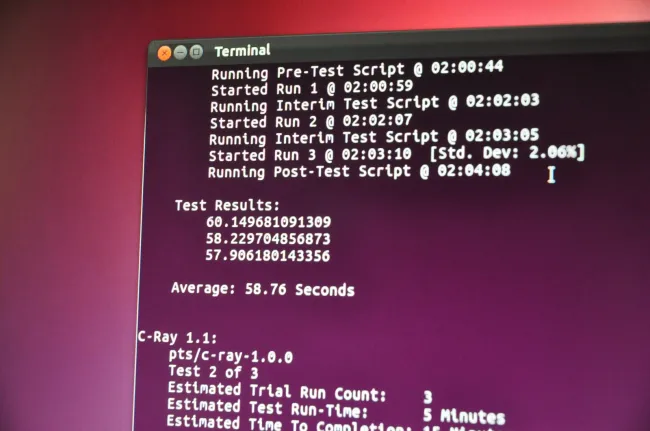
the Linux 3.1 kernel with its default config builds in just less than a minute (about 58 second average) -- that's without any overclocking!
Stay tuned for more information in the coming days. The Core i7 3960X is a mighty impressive performer under Linux. Being able to build a default Linux kernel, Mesa / Gallium3D, and other large software stacks so quickly may also open up some new possibilities on the
Phoronix Test Suite /
OpenBenchmarking.org /
Phoromatic side for more interesting
automated bisecting efforts of performance and functional regressions and
automatically finding performance optimizations and other auto-tuning tasks.
While the
Intel Core i7 3960X packs a hell of a punch, its TDP is only 130 Watts (5 Watts more than AMD's FX-8150 Bulldozer and the same thermal rating as the previous-generation Core i7 990X Gulftown), but its price-tag of $1050 USD will keep it out of the hands of most Linux desktop users.