After trying
the openSUSE beer at FOSDEM, which is specially brewed at a small Bavarian brewery near the Nürnberg SUSE office and where many of their developers reside, I began wondering if other Linux distributions were represented by beer, what beers would they be? Continue on for this enjoyable weekend article where the leading Linux distributions are described in terms of beer.
As many Phoronix readers know, I'm quite a beer enthusiast (mostly the wonderful German/Bavarian beers) and so trying out the openSUSE Old Toad beer from Klosterbrauerei Weißenohe was interesting and enjoyable. Afterwards I began wondering if Ubuntu, Fedora, or other operating systems / distributions were reincarnated into beer, what would they be like? Here's my perspective on matching Linux distributions to beer.
Of course, within the
forums you are welcome to
share your thoughts and beer pairings. Prost!

If
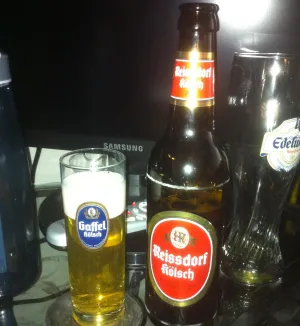
Ubuntu were to be represented by a beer, I think it would probably fit as a
Kölsch beer from the Cologne region of Germany. Ubuntu is undoubtedly focused on being end-user-friendly and so are the Kölsch beers like
Reissdorf and
Gaffel. The Kölsch beers tend to contain less alcohol than other beers and they are traditionally served out of (small) 20cl glasses, which is obviously much smaller than downing a one liter Maß in Bavaria. Kölsch beers tend to be very easy to try and consume, just like Ubuntu. Kölsch beers are also popular in the region and extremely popular during the Karneval time. (Of course, after the fall-out from the Unity desktop and other changes by Canonical, some in the community would likely rather associate Ubuntu with one of the American light beers (e.g. Miller Lite) that is extremely easy to consume, extremely popular, but to the taste of many it's awful.)

On the opposite end,
Arch and
Gentoo would fit well as being a
Starkbier. In Bavaria, this "strong beer" served during Starkbierfest by the Munich breweries contains more alcohol (10% or more) than you will find in beer during Oktoberfest and other seasons. Starkbierfest happens annually in Munich in the weeks leading up to Easter when this very strong, very dark beer (Starkbierfest is a great event and contains virtually no tourists). So like Arch and Gentoo, Starkbier isn't for everyone as if not prepared it can bite you hard. At the same time, to many it's very enjoyable. Also, the overall market-share of Starkbier is quite low.
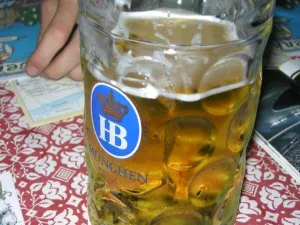
Hofbräu is extremely fitting as
Android. Hofbräu is very popular -- especially to Americans it's perhaps the most well recognized Munich beer due to many people/tourists hearing of the Hofbräuhaus. Beers from Hofbräu though don't tend to be anything special, aren't too popular with Munich natives (just as many die-hard Linux native users would prefer MeeGo, OpenMoko, or other "open" Linux phones), and in America it's largely a duopoly market (at most stores in America as far as Munich beers go it's usually either from Hofbräu or Spaten-Franziskaner that can be more easily found) just as most phones these days are either Android or iPhone.

Red Hat Enterprise Linux (with other Enterprise Linux distributions) and
Augustiner could go hand-in-hand. Both have been around for a very long time in their respective markets, both are very popular in the markets that they serve, and they are very stable. Augustiner complies strictly with the Reinheitsgebot, the Augustiner beer at Oktoberfest is still served out of wooden barrels, and the Augustiner brewery is still very strict, just as Red Hat Enterprise Linux is in terms of stability and building upon a proven process. Both Augustiner and RHEL stand the test of time.
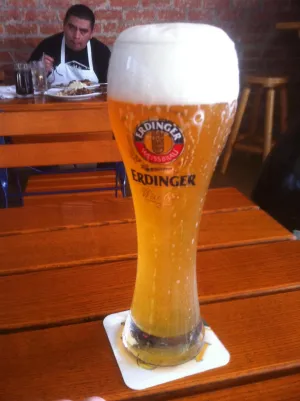
Similar to the Augustiner-RHEL pairing,
Debian would fit with
Erdinger for the same reasons. Erdinger is another wonderful Bavarian brewery just outside of Munich.
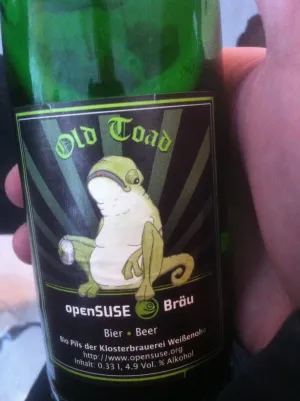
OpenSUSE is already covered with its own beer...
Old Toad from Klosterbrauerei Weißenohe. As a runner-up I would pick
Gutmann, which is a brewery just south of Nürnberg where the SUSE offices are located and is very popular and very good Hefeweizen.
It was a bit difficult thinking of a fitting beer for
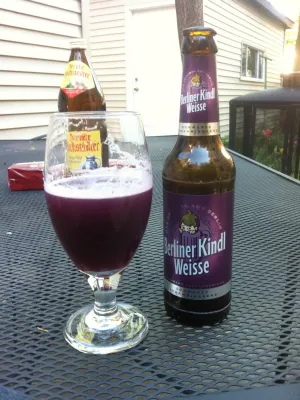
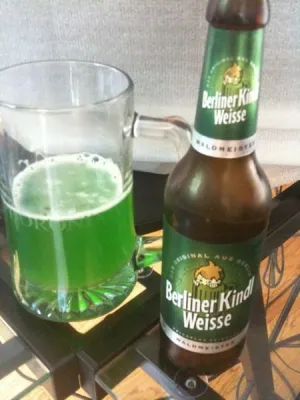
Fedora. In the end
Berliner Weisse was the most fitting beer that came to mind. Like Fedora, Berliner Weisse is quite popular in its region, tastes good, and they tend to experiment a lot compared to the traditional establishments. Berliner Weisse is experimental in terms of having beer with raspberry, woodruff/waldmeister, strawberry, orange, and other fruit flavors. (Just as Fedora can be somewhat experimental in terms of ambitious features, quickly pulling in upstream packages, the sometimes wild state of Rawhide, etc.) The alcohol content is also quite low for the Berliner Weisse beers making it popular and easy to try out, just like this Red Hat sponsored community distribution.

Mandriva could be paired with the
200 year Oktoberfest Jubilee Beer. For Oktoberfest 2010, the six main breweries of Munich all collaborated to create this "200 year Oktoberfest Jubilee Beer" to celebrate the 200th anniversary of the wonderful festival. This was quite an interesting beer and attempted to mimic the taste of beer from 200 years ago, but unfortunately only brewed for this 200th anniversary celebration and is never to be made again. Along the same lines, unfortunately, Mandriva's best days have probably passed -- going back to the glorious days of Mandrake.

What other Linux beer pairings would you make? Would Windows be a Bud Light? Looking for any other beer recommendations? This
discussion can be continued this weekend in the forums. For anyone not into beer, you can share
what was your first Linux distribution, a long Phoronix Forums discussion that's been going on since 2007. If this article made you thirsty for some wonderful beers, be sure to visit Oktoberfest; until September, you can read
my guide to Oktoberfest or check out photos from
Oktoberfest 2011.